
Waking up with mysterious, itchy bites can be a nightmare, and the most common culprit is the elusive bed bug (Cimex lectularius). These tiny pests are masters of concealment, hiding in the dark cracks and crevices of your sleeping area. Early detection is crucial for a fast and effective treatment, saving you from a prolonged, stressful infestation.
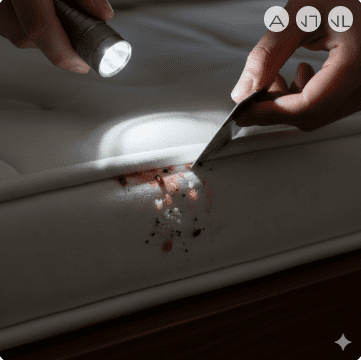
The Four Signs of Bed Bugs
Before stripping your bed, familiarize yourself with the four major pieces of evidence bed bugs leave behind:
Fecal Spots (Black Stains)
This is the most common sign. Bed bug excrement is digested blood, leaving behind tiny, dark brown or black spots, often the size of a pinhead. On fabric, these spots look like they were made with a fine-tipped black marker and will often smear if wiped with a damp rag or cotton swab. Look for clusters of these spots near seams and hiding places.
Blood Spots (Red/Rusty Stains)
These are small, reddish or rusty stains found on your sheets and pillowcases. They are usually caused by an engorged bed bug being crushed as you sleep or move.
Shed Skins (Shell Casings)
As bed bugs grow from tiny nymphs to adults, they shed their outer skin (exoskeletons) five times. These empty, pale yellow or translucent shells are often found clustered near harborages and are clear, undeniable proof of an active and growing infestation.
Live Insects and Eggs
Adult bed bugs are flat, oval, and about the size and color of an apple seed (reddish-brown). Eggs are tiny (about $1\text{mm}$), pearly white, and often found glued to fabric or wood in clusters.
Step-by-Step Mattress and Bedding Inspection
A thorough inspection requires a flashlight, a thin tool (like a credit card or putty knife), and a systematic approach:
1. Strip and Examine the Bedding
- Carefully remove all sheets, pillowcases, and mattress protectors. Avoid shaking them, as this can scatter pests.
- Inspect the linens for the reddish blood spots and dark fecal spots. If you find any, immediately seal the bedding in plastic bags and wash it on the hottest possible setting before drying on high heat.
2. Focus on the Mattress Seams and Piping
- The tight folds, seams, and piping around the edge of the mattress are the number one hiding spot.
- Use your flashlight to closely inspect every inch of the piping. Look for the black fecal spots, shed skins, and live bugs nestled deep inside.
- Use the thin card to run along the seams and folds to push out any bugs or eggs hiding deep within the fabric.
3. Inspect the Box Spring
- Flip the mattress and then the box spring. Bed bugs love the wood frame and fabric covering of the box spring.
- Peel back the thin dust cover on the bottom of the box spring and inspect the joints, staples, and the interior wood structure for clusters of eggs and dark fecal marks.
4. The Bed Frame and Headboard
- Bed bugs use the bed frame to travel to and from the mattress.
- Pay close attention to all joints, screw holes, and wooden crevices in the bed frame and headboard. The headboard is a frequent hiding place, especially where it meets the wall.
- In severe cases, remove any items near the bed (nightstands, clocks) and check along the baseboards and even behind electrical outlets.
If you find multiple signs of bed bugs, or if you capture a live specimen, contact a professional pest control service immediately. Early action is your best defense against a full-blown infestation.
Contact Us
We are happy to assist you with all your pest control needs from start to finish. Reach out to any of us for your needs, and we look forward to building a long-standing relationship with you!
Call
(+6011) 1119-5055
(+6011) 1119-5055
contact@pestcontrolinnovation.com
Office
Suite 2-5-6, Menara KLH Jalan Kasipillay Jalan Ipoh 51200 Kuala Lumpur Malaysia